

Philippines: Boracay returns to the front

The Philippines officially reopened Boracay Island to visitors last Friday, after six months of closure, by imposing new rules to combat the environmental ravages of mass tourism.
Considering that overcrowding had transformed this little corner of paradise into a « septic tank« , Philippine President Rodrigo Duterte ordered in April the closure of this island, which is the most popular in the archipelago.
The idea was to clean up the site, clean up an uncontrolled hotel development, or build wastewater treatment units.
The island has adopted new rules, such as a ban on smoking or drinking alcohol on its white sandy beaches, and restrictions on the number of tourists allowed, and the number of hotels, while major renovations are underway.
Among the first tourists to arrive on Friday, some foreigners had never set foot in Boracay before, and were looking forward to a clean and less crowded island.
A ghost town deserted by tourists
Once a backpacker’s destination, the small island of the Visayas archipelago, whose beaches are regularly classified by some travel magazines as the most beautiful in the world, measures only 10 square kilometres. Over the decades, it has undergone a metamorphosis to welcome up to two million visitors per year.
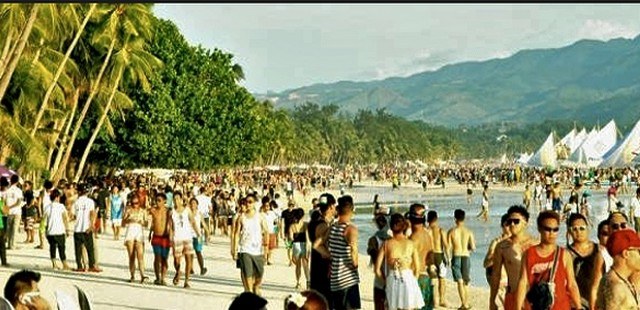 In high season, 40,000 tourists could stay on the island at the same time.
While tourism has generated $1 billion in annual revenues, it has also resulted in the accumulation of mountains of rubbish that far exceed its sanitation capacity, as well as a permanent festive atmosphere that the government no longer tastes.
From now on, the island will no longer be allowed to accommodate more than 19,200 tourists at the same time, a quota that the authorities intend to enforce by controlling the island’s hotel supply in particular.
The government has also driven fire-eaters, masseuses, street vendors, stray dogs and even the builders of the island’s iconic sand castles off the coast. Wild constructions were razed to the ground to create a 30-metre wide waterfront easement.
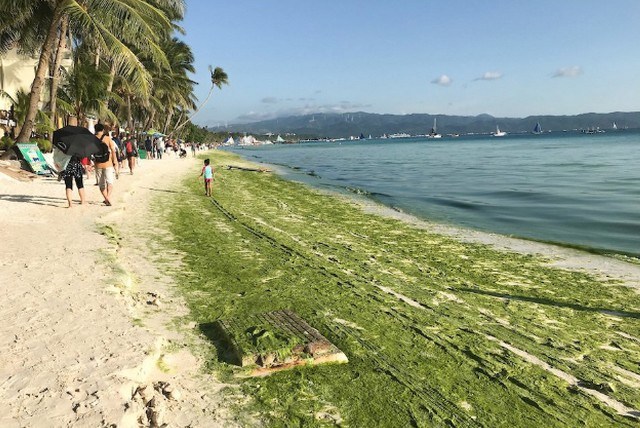 All water sports, except swimming, are currently prohibited and all three casinos on the island have been closed.
Nearly 400 hotels and restaurants accused of violating environmental regulations have had to close. Airlines and ferries have had to reduce their service to the area.
The gigantic beach parties called « Laboracay » organized around May 1st, which attracted tens of thousands of people, are also a thing of the past.
The reopening of the island is also a relief for tens of thousands of people who make a living from the tourism industry and who were left without income in April.
Overexploitation by mass tourism is far from being an exclusively Filipino problem and other Southeast Asian countries have had to take drastic measures to try to limit the scrapping.
For example, the Thai authorities have also closed Maya Bay – the Thai bay made famous by the film « The Beach » with Leonardo DiCaprio- on the island of Koh Phi Phi Phi Ley near Phuket for an indefinite period.


On the same subject

There are crocodiles everywhere in the city here
Australia’s Northern Territory is experiencing a major climate crisis this Monday, March 9, 2026,...

A thousand and one original ways to celebrate St. Patrick’s Day
Every year, Ireland celebrates the memory of Saint Patrick, whose influence has endured through...

Why Angola wants to play a major role in global tourism
At the opening press conference of ITB Berlin 2026, Márcio de Jesus Lopes Daniel,...


